Learn to Trade
- Details
These are basically symmetrical triangles and the difference being the time frame.
The Pennants only take 1-2 weeks to build where as a symmetrical triangle could take from 1 month to 3 months to build.
Volume is normally low during the formation but high once it breakout, please bear in mind that this is dependant on time frame e.g. Hourly to intraday will form a lot quicker.
Please click on the chart below for larger image
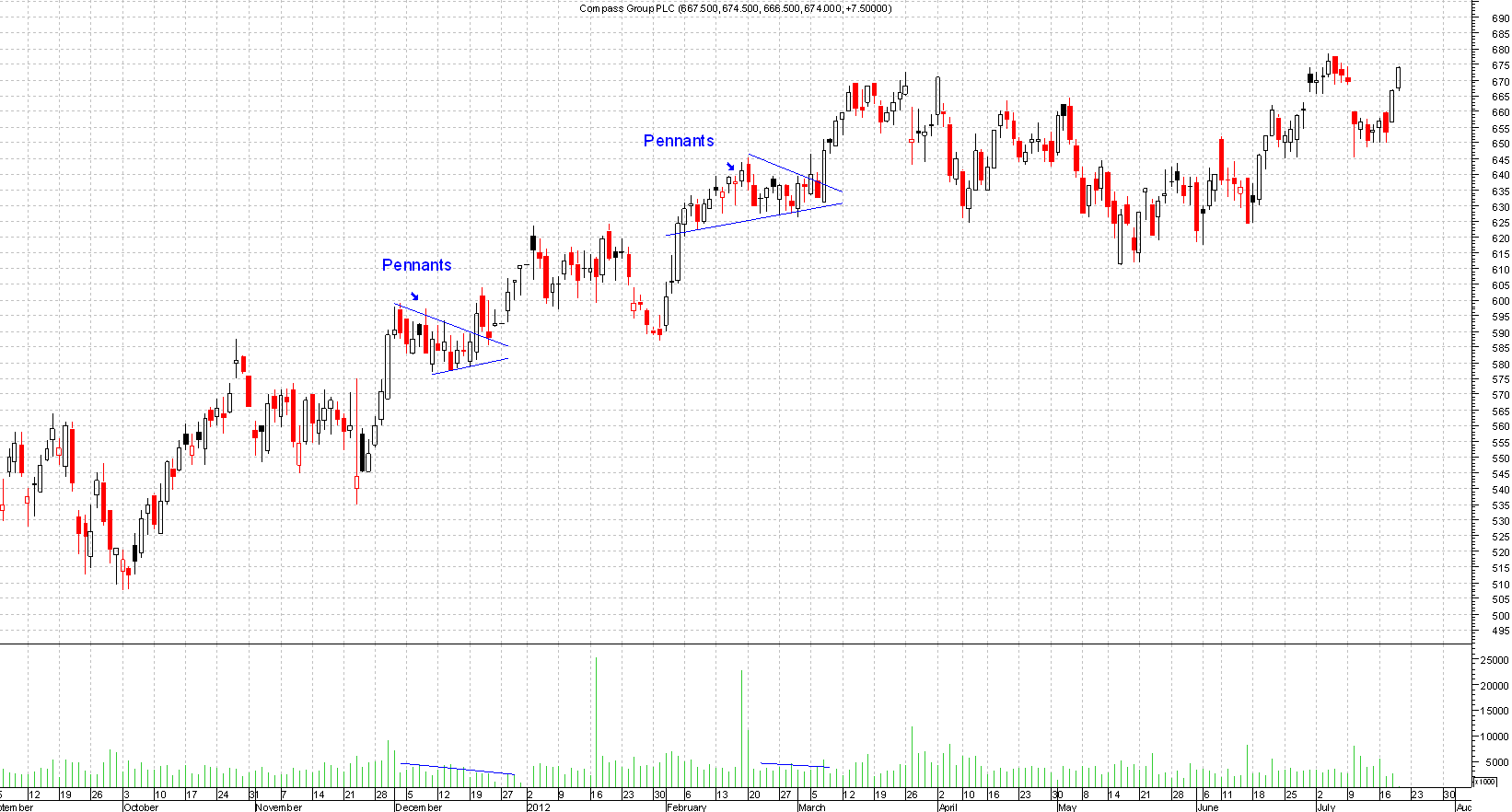
These pennants formations usually form and appear at the mid-way point of a trend.
- Details
This is the opposite of a head and shoulders pattern. (See the article on head and shoulder pattern).
The only true difference is the volume, bottoming patterns tends to have higher volume associated with them. This forms at the bottom of a trend.
You have to have keen eyes to spot this developing as first signs are the higher highs, which will be forming the right shoulders which is right near the signal line(neck line).
Please click on the chart below for larger image

- Details
This is by far the most famous and popular charting pattern. This pattern consists of a left shoulder, head and a right shoulder.
- Details
Gaps occur when a price chart opens higher (or vice versa) than the previous days close. Where no trading has taken place is usually a good time for gap trading to be profitable.
- Details
The flag pattern is a continuation pattern and as suggested by the name these pattern form to look like a flag.
They have 2 parallel lines that are slightly on the slope. This slopes up in a downtrend and slopes down in an uptrend.
Flags generally appear in the midpoint of a trend, volume is normally low during the formation but high once it breaks out.
Please click on the chart below for larger image
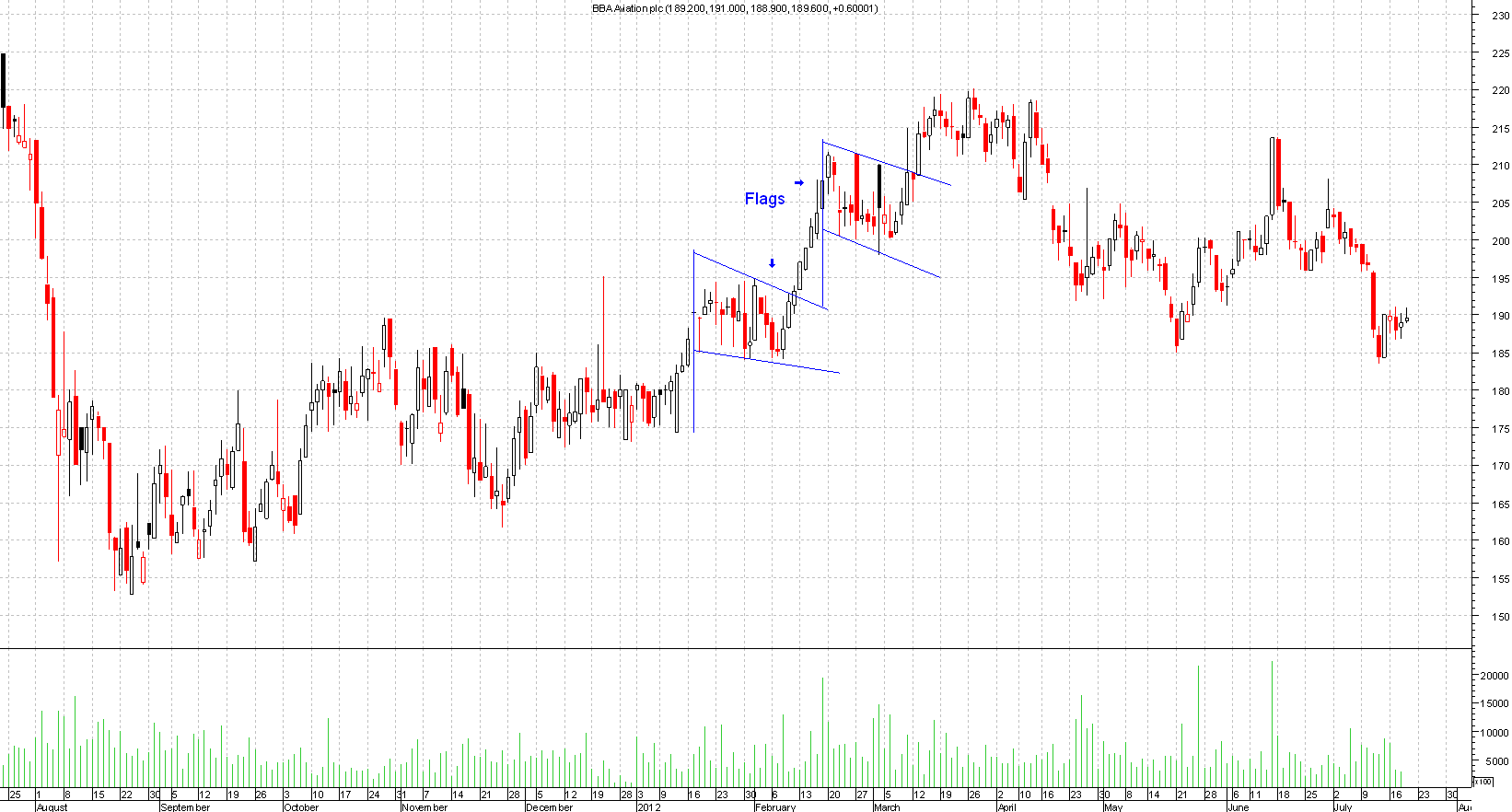
If it's in an uptrend then it should breakout above the top parallel line and the opposite for a downtrend.
These patterns only last a very short term say 1-2 weeks long. This is the time the shares build its strength.
- Details
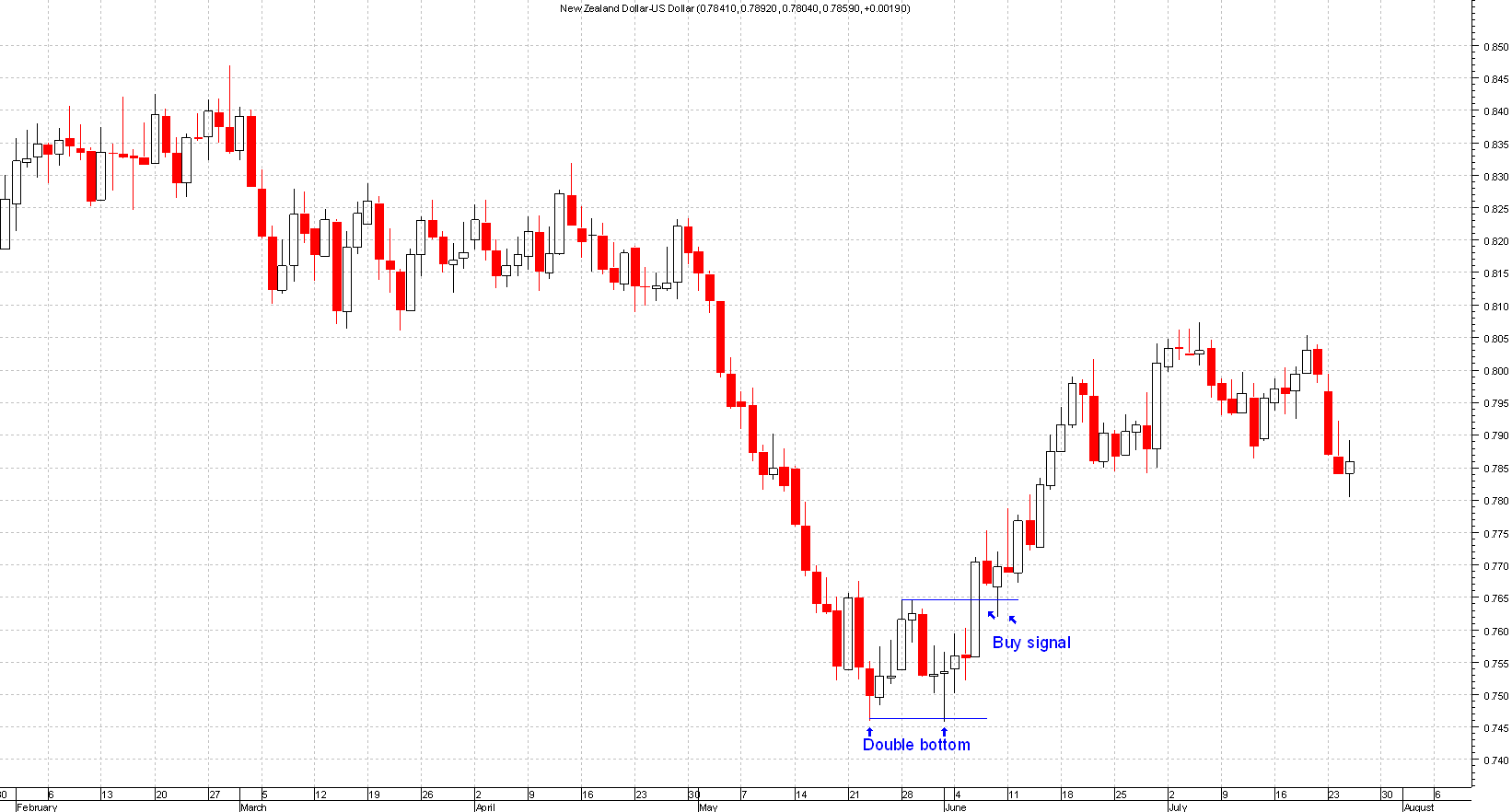
This is the opposite of the double top (see double top article), like most technical patterns the 2 peaks don't have to be spot on but close enough by a few points.
This pattern has 2 similar lows then followed by a rally, the break of the middle peak should have higher volume associated with this to generate the buy signal.
Stops should be below the double bottom but the problem with this is that it could be a big risk if it's a few hundred pips away, so risk management should be incorporated with all stops.
Please click on the chart below for larger image
NOTE
When trading double tops or bottoms be very careful as these patterns are really common.
You do get a lot of false signals with these trades due to the fact that in an downtrend prices always reverse after a peak and then breaks lower, that attempt at the break lower is what causes the problems.
People second guess this, which is the same for an Uptrend.
- Details
This pattern is similar to the rounded bottom, the only difference is once the rounded bottom is complete you then find the price retreats a little then goes sideways then goes up again.
This creates the handle, the buy signal comes when the resistance is broken, the point where the peaks are joined together and formed the cup and handle.
Target
The target is taken from the bottom to the top which then is projected from the break out point.
Please click on the chart below for larger image
