A price channel is a pair of parallel lines that contain the price as it trends. In an uptrend, the lower line joins the lows and the upper line runs parallel across the highs. Channels help you see where a pullback might stop, where a rally might stall and when a trend is changing.
How to draw a channel
- Draw the main trend line first: under the lows in an uptrend, or across the highs in a downtrend.
- Copy that line and move it, keeping it parallel, until it touches the opposite side: across the highs in an uptrend, or under the lows in a downtrend.
- You need at least two touches on the main line and one on the opposite line to start with. More touches make the channel more reliable.
A sideways channel, where both lines are flat, is usually called a range. See our range trading guide for that.
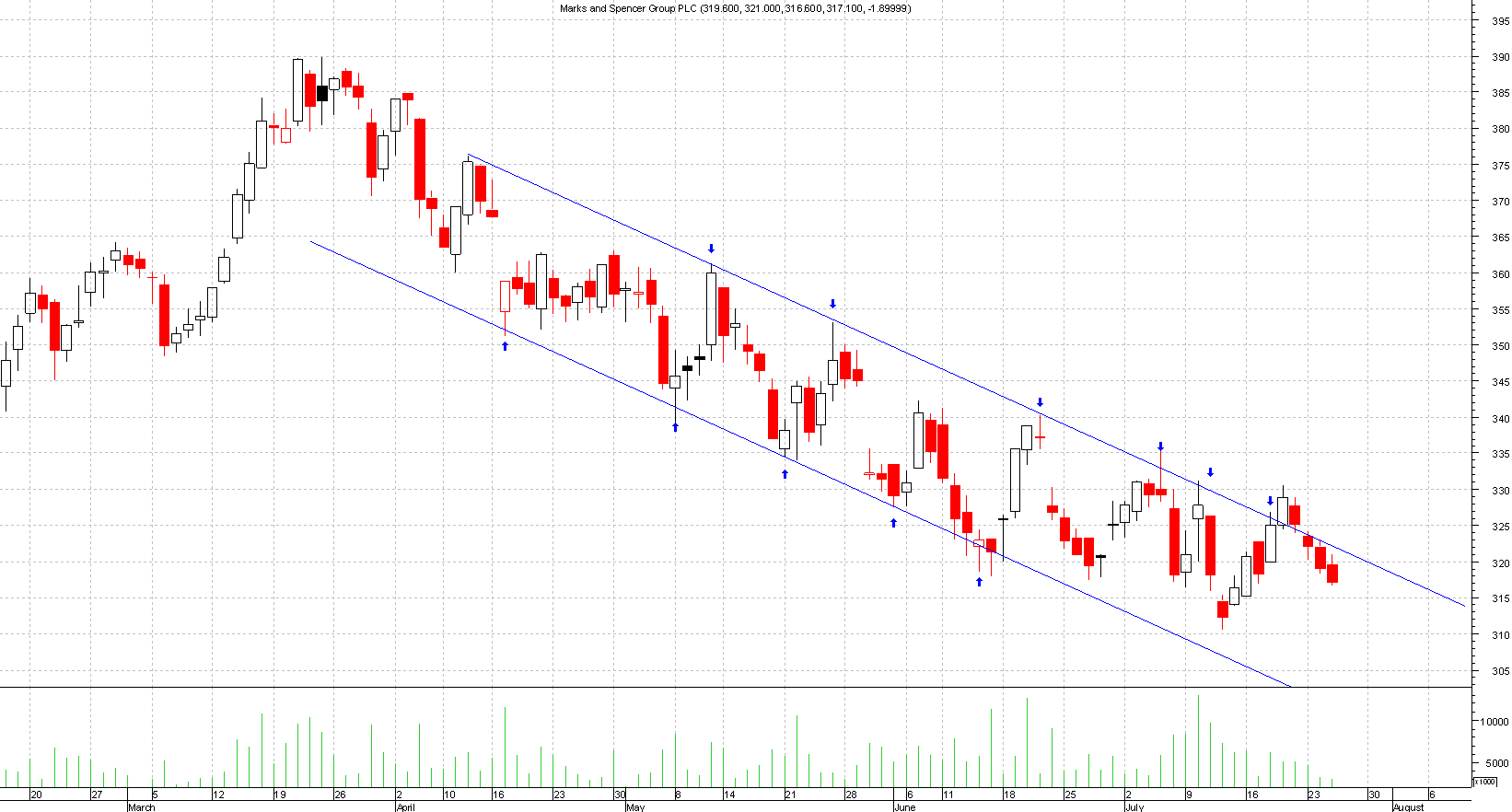
How to trade inside a channel
- In a rising channel, look to buy near the lower line and take profits near the upper line.
- In a falling channel, look to sell or short near the upper line and take profits near the lower line.
- Trade in the direction of the channel. Buying at the top of a falling channel and hoping for a breakout is a low-odds trade.
- Place stops just outside the channel line you are trading from.
Channel breakouts
When the price closes outside a channel, the trend may be speeding up, slowing down or reversing. A common way to set a target is to measure the width of the channel and project it from the breakout point.
A break of the main trend line (the lower line in an uptrend) is more serious than a break of the outer line. It is often the first sign the trend is ending.
Mistakes to avoid
- Forcing the lines to fit. If the price keeps overshooting both lines, the channel is not working.
- Buying every touch of the lower line late in a trend, when the price is starting to fail to reach the upper line.
- Forgetting that channels break. Always use a stop.
Related guides
This guide is for education only and is not financial advice. Trading carries risk; you can lose more than you expect.