A flag is a short pause after a sharp move. The sharp move is the flagpole, and the pause is a small channel that drifts slightly against the trend, like a flag on a pole. When the price breaks out of the flag, the trend often picks up where it left off. Flags are continuation patterns.
What a flag looks like
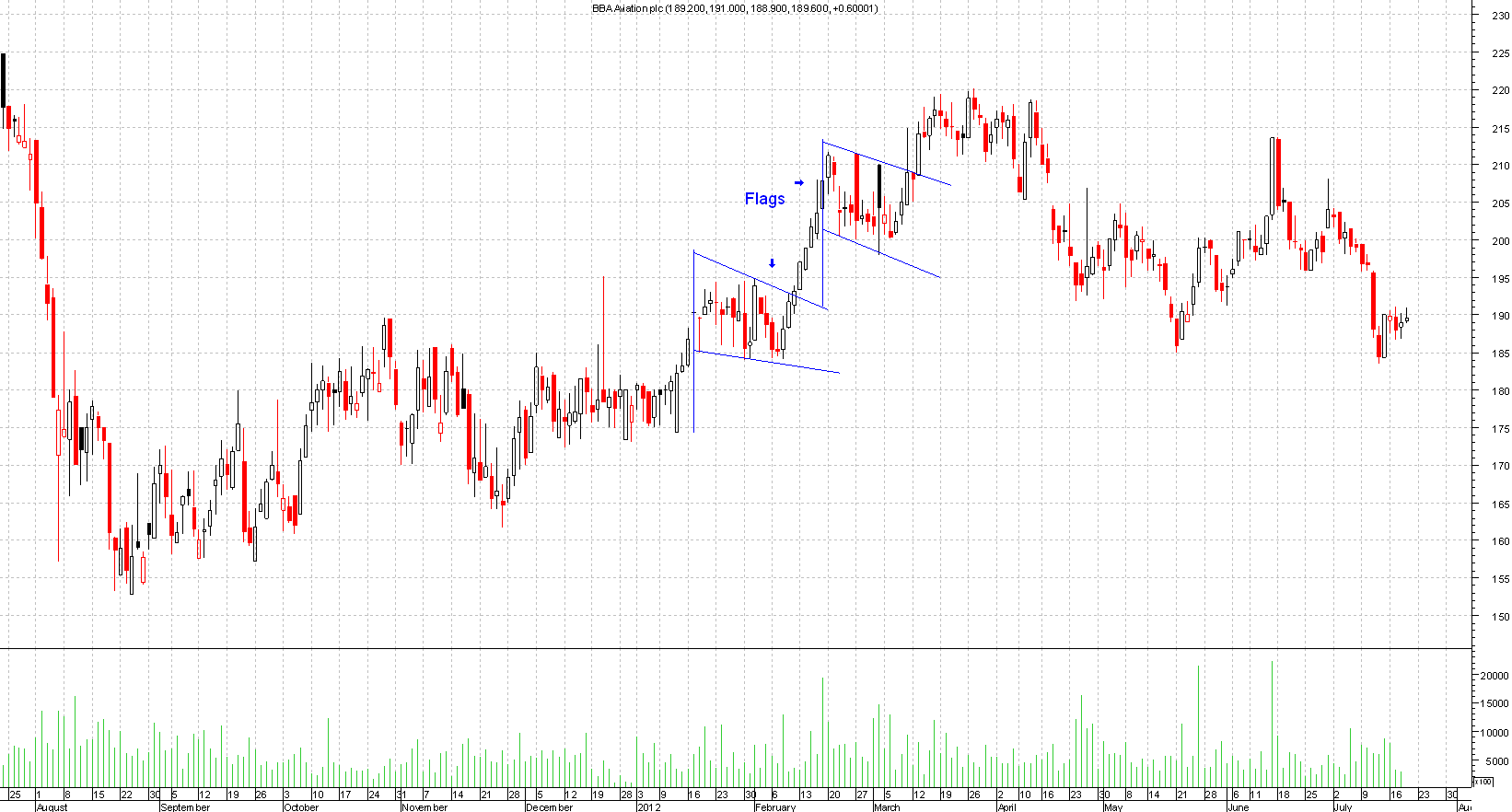
Bull flag: a strong, steep rise (the pole), followed by a short spell where the price drifts slightly lower between two parallel lines. The breakout comes when the price closes above the top of the flag.
Bear flag: a sharp fall, followed by a short drift slightly higher between two parallel lines, then a break below the bottom of the flag.
Flags usually appear around the middle of a trend. On a daily chart they normally last from a few days to about three weeks. If the pause drags on much longer, it is probably a different pattern.
What to look for
- A clear, fast move before the flag. No pole, no flag.
- A flag that slopes gently against the trend and does not give back too much of the pole. Less than half the pole is normal; a third or less is better.
- Volume that is high on the pole, light during the flag and rises again on the breakout.
How to trade a flag
- Entry: on a close outside the flag in the direction of the trend.
- Stop: on the other side of the flag. For a bull flag, that is below the flag's lowest point.
- Target: measure the length of the pole and add it to the breakout point (or subtract it for a bear flag). This "measured move" is a guide, not a promise, so many traders take some profit early.
Mistakes to avoid
- Calling any small pullback a flag. The pole must be sharp and the pause must be orderly.
- Chasing a breakout that has already run far beyond the flag.
- Ignoring a flag that keeps going down. If a bull flag falls through half of the pole, the buying power has gone.
Related guides
This guide is for education only and is not financial advice. Trading carries risk; you can lose more than you expect.