A symmetrical triangle forms when the highs keep getting lower and the lows keep getting higher, so the price coils into a point. Neither buyers nor sellers are in charge yet. The pattern itself does not say which way the price will break, but it usually continues the trend that came before it.
What a symmetrical triangle looks like
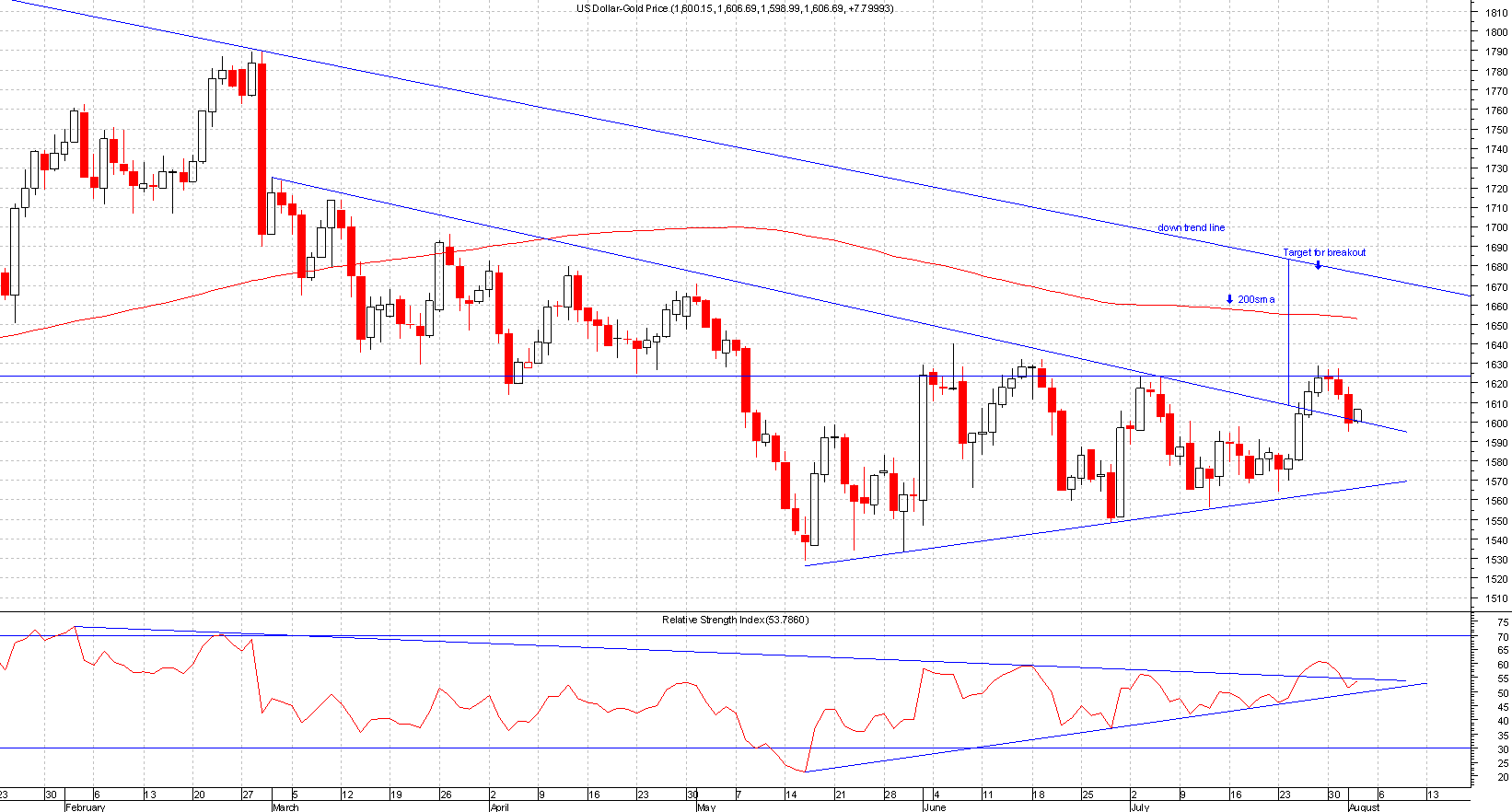
Join at least two lower highs with a falling line and at least two higher lows with a rising line. The two lines slope towards each other at a similar angle and would meet at a point called the apex.
On a daily chart a symmetrical triangle often takes one to three months to form. A very small, quick version that follows a sharp move is usually called a pennant.
Which way will it break?
Assume the price will break in the direction of the trend that came before the triangle. If the market was rising before the triangle formed, an upside break is more likely, and vice versa. That is a tendency, not a rule, so wait for the break before you act.
- Volume usually dries up as the triangle tightens. A breakout on a sharp rise in volume is more trustworthy.
- Breakouts tend to come two-thirds to three-quarters of the way to the apex. If the price is still inside the triangle near the tip, the pattern is losing its value.
- Watch for false breaks: a quick poke out of the triangle that closes back inside.
How to trade a symmetrical triangle
- Entry: trade the direction of the breakout on a close outside the triangle. Some traders set orders just above the top line and just below the bottom line and cancel whichever is not used.
- Stop: just back inside the triangle, beyond the last swing point on the other side.
- Target: measure the height of the triangle at its widest part and project it from the breakout point.
Mistakes to avoid
- Guessing the direction early. The whole point of the pattern is that the market has not decided yet.
- Treating every narrowing range as a triangle. You need at least two clear touches on each line.
- Holding on after a failed break. If the price slips back inside and through the other line, the trade is wrong.
Related guides
This guide is for education only and is not financial advice. Trading carries risk; you can lose more than you expect.