
If you're looking to build a robust investment portfolio, one of the most powerful tools at your disposal is a stock screener. Whether you're a complete beginner or an experienced investor wanting to streamline your research process, learning how to use a stock screener UK investors trust can save you countless hours and help you uncover hidden investment opportunities.
In this comprehensive guide, we'll walk you through everything you need to know about stock screeners—from the basics to advanced filtering techniques. By the end, you'll be equipped to use the ChartsView screener tool confidently and discover stocks that align with your investment strategy.
What Is a Stock Screener?
A stock screener is a digital tool that helps you filter thousands of stocks based on specific criteria you set. Rather than manually reviewing company reports and charts for hundreds of firms, a stock screener does the heavy lifting for you, narrowing down the universe of UK and global shares to a manageable list of candidates worth investigating further.
Think of it like a sieve. You pour in thousands of stocks, and the screener filters them based on your requirements—whether that's dividend yield, price-to-earnings ratio, sector, or market capitalisation. What emerges are the stocks that match your investment thesis.
For UK retail investors, this is invaluable. Rather than getting overwhelmed by UK blue chips, mid-caps, and countless smaller companies, you can focus on shares that genuinely interest you. The ChartsView stock screener makes this process straightforward and intuitive.
Why Should You Use a Stock Screener?
Stock screeners offer several compelling advantages for any investor:
- Save Time: Manually reviewing individual company data is laborious. A screener delivers relevant results in seconds.
- Remove Emotion: Screening forces you to define clear investment criteria before you see the results, reducing emotional decision-making.
- Discover Opportunities: You'll find stocks you might never have considered otherwise, expanding your investment universe.
- Maintain Consistency: Use the same screening criteria across different market environments to maintain a disciplined approach.
- Learn Market Dynamics: By experimenting with different filters, you'll develop a deeper understanding of how the stock market works.
Many investors also use stock screeners alongside our ChartsView feed and daily briefing to stay informed about developments affecting their watchlist.
Understanding Key Stock Screener Filters
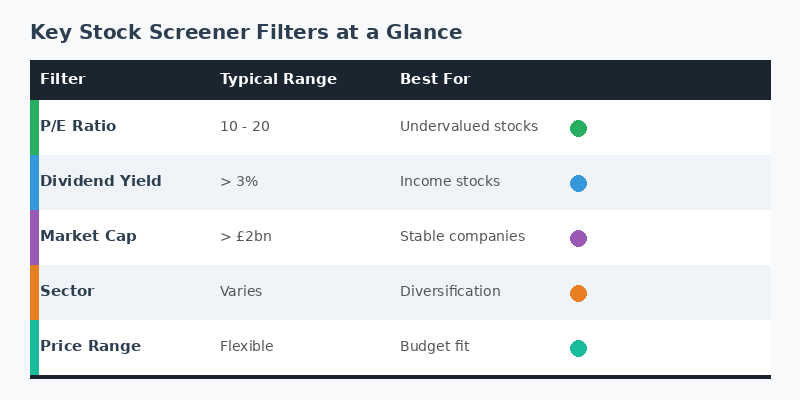
Before you start screening, it's essential to understand what the main filters do. Let's break down the most commonly used criteria:
Price-to-Earnings Ratio (P/E)
The P/E ratio tells you how much investors are willing to pay for each pound of company earnings. It's calculated by dividing a company's share price by its earnings per share.
A low P/E ratio might suggest a share is undervalued, but it could also indicate the market has concerns about the company's future. A high P/E ratio suggests the market expects strong growth ahead. Most UK investors screen for P/E ratios between 10 and 20, though this varies by sector.
Dividend Yield
Dividend yield represents the annual dividend payment as a percentage of the current share price. For income-focused investors, this is critical. The UK's large-cap stocks often offer attractive dividend yields.
When using a dividend yield filter, remember that higher yields can indicate undervalued shares—or they might suggest the company is struggling and has cut its growth prospects. Always investigate why a yield is high before committing capital.
Market Capitalisation
Market cap is the total value of a company's shares. It's calculated by multiplying the share price by the number of shares outstanding. Understanding market cap helps you categorise companies:
- Large-cap: Over £10 billion (typically more stable, lower growth)
- Mid-cap: £2 billion to £10 billion (balanced risk and growth)
- Small-cap: Under £2 billion (higher risk, higher growth potential)
Many beginners start by screening for large or mid-cap shares, which tend to be more liquid and less volatile. The ChartsView comparison tool is excellent for evaluating different market cap stocks side by side.
Sector Filter
Stocks are grouped into sectors such as technology, financial services, healthcare, energy, and consumer goods. Screening by sector allows you to:
- Build a diversified portfolio across different industries
- Focus on sectors where you have investment conviction
- Avoid sector-specific risks (for example, avoiding banking stocks if you're concerned about interest rate changes)
Price Range
Filtering by price range helps you find shares within your budget or focuses your search on specific trading bands. Some investors prefer cheaper shares thinking they offer better value, but remember: a lower price doesn't necessarily mean better value. Always examine the fundamentals.
Pro Tip
Combine multiple filters for better results. Instead of just screening for high dividend yield, also filter by market cap and sector to find stable dividend payers across different industries.
Step-by-Step Guide to Using a Stock Screener
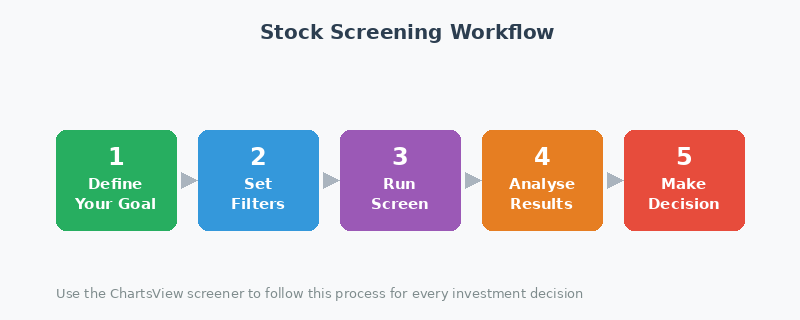
Now let's walk through the process of actually using a stock screener. Follow these steps to find potential investment candidates:
Step 1: Define Your Investment Goal
Before you open the ChartsView screener, ask yourself: what type of stocks am I looking for? Are you seeking:
- High dividend-paying stocks for income?
- Growth stocks with rising earnings?
- Value stocks trading below their intrinsic worth?
- Shares in a specific sector?
Your answer will guide your filter selection.
Step 2: Select Your Primary Filter
Choose the filter most aligned with your goal. For an income investor, this might be dividend yield. For a growth investor, it might be earnings growth rate. Start with one primary filter before adding others.
Step 3: Set Your Filter Parameters
Decide on the range or threshold. For example: "Show me all UK blue chips with a dividend yield above 3% and a P/E ratio below 15." Be specific, but not overly restrictive—you want enough results to work with.
Step 4: Run the Screen
Execute your screen and review the results. The ChartsView screener will instantly show you shares matching your criteria, typically ranked by relevance.
Step 5: Analyse the Results
Don't simply buy the first result. Review the top candidates and investigate further. Use ChartsView's tools to:
- Check the portfolio impact of each potential purchase
- Compare shares directly to identify the strongest candidates
- Review charts and technical patterns
- Read up on company news in the ChartsView feed
Step 6: Check the Leaderboard
Visit the ChartsView leaderboard to see which screened stocks are performing well and gaining attention from other community members. This can provide additional confidence in your selection.
Step 7: Make Your Decision
After thorough analysis, decide whether the share aligns with your investment thesis. If yes, consider starting with a small position and building it over time. If you're unsure, keep researching using the ChartsView stocks section.
Common Stock Screener Mistakes to Avoid
Even with the best tools, many investors make predictable errors when screening for stocks. Here's how to avoid them:
Mistake 1: Over-Filtering
Setting too many filters at once can eliminate viable options. Start simple—use just two or three filters—and adjust as needed.
Mistake 2: Ignoring Context
A high dividend yield might seem attractive, but if the company is cutting back on investment or facing industry headwinds, that yield could be unsustainable. Always understand the "why" behind the numbers.
Mistake 3: Chasing Latest Trends
Don't screen based on what's been performing well recently. Yesterday's winners often underperform tomorrow. Stick to fundamental criteria aligned with your investment philosophy.
Mistake 4: Neglecting Company Quality
Numbers are important, but they don't tell the whole story. Research the company's competitive position, management team, and market dynamics before investing.
Mistake 5: Setting and Forgetting
Markets change. A screened stock that looked attractive six months ago might no longer fit your criteria today. Review your watchlist regularly using the daily briefing to stay informed.
Remember
A stock screener is a starting point for your research, not a complete investment strategy. Always conduct thorough due diligence before committing your money.
Next Steps: Start Screening Today
You now have a solid understanding of stock screeners and how to use them effectively. The next step is hands-on experience. The best way to learn is by experimenting with different filter combinations and seeing how the results change.
Consider starting with a simple screen: perhaps all UK blue chips with a P/E ratio below 15 and a dividend yield above 3%. Review the results, investigate the top five candidates, and develop your own criteria based on your investment goals and risk tolerance.
As you gain confidence, you can layer on additional filters—earnings growth, cash flow metrics, technical patterns—to refine your selection process. Over time, you'll develop a systematic approach to finding investment opportunities that align with your vision.
The UK stock market offers tremendous diversity, with thousands of shares trading daily. Rather than feeling overwhelmed by choice, use a stock screener to bring order to that complexity. It's one of the most valuable skills any investor can develop.